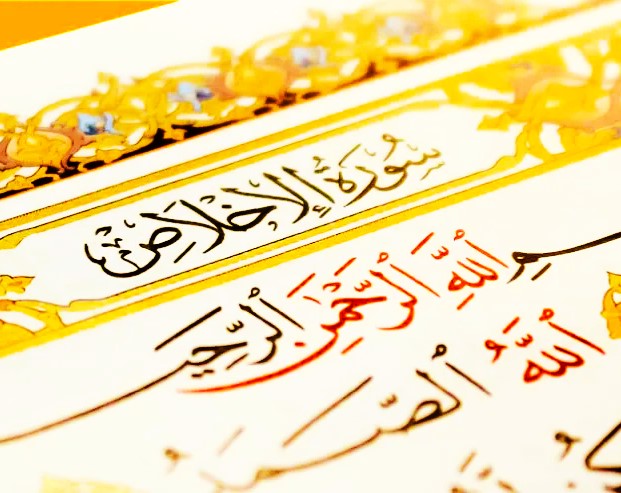
Surah Ikhlas
🔹 “Say: He is Allah, the One and Only.”
This verse declares the absolute oneness of Allah (SWT). It emphasizes that He is unique, unmatched, and indivisible. No one else shares His essence or attributes. His unity is complete, and there is nothing like Him in existence.
🔹 “Allah, the Eternal Refuge.”
Building on the first verse, this highlights Allah’s self-sufficiency. He is independent of all creation, needing nothing from anyone. He has full power over all matters, and nothing can hinder His will. Our acts of worship do not benefit Him; rather, we worship because we need Him—to attain our purpose and ultimate goal, which is Jannah (Paradise).
🔹 “He neither begets nor is born.”
This verse further confirms Allah’s purity and eternal existence. He has no parent or child, unlike what is falsely claimed in some beliefs. He existed before time began and will continue forever. This statement refutes the idea of God having a lineage or offspring, including the concept of the Trinity in Christianity. Allah even calls Jesus (AS) “the son of Mary” to reject the notion of him being His son. It also answers philosophical questions like “Who created God?” by affirming that Allah was never created—He has always been.
🔹 “And there is none comparable to Him.”
The final verse declares Allah’s absolute uniqueness. Nothing in creation equals Him in essence, attributes, or power. As the Creator of all, He transcends every form and concept. This is why Islam forbids depicting Allah in images or statues, as nothing can represent His majesty.
Summary of the Surah’s Theme
Surah Al-Ikhlas powerfully summarizes the oneness and purity of Allah in just a few verses. It emphasizes that He is unlike anything else in His attributes, dominion, and divinity. As the sole Creator and Sustainer, only He deserves worship.
Hadith on Its Virtue
Abu’l-Dardaa’ (RA) narrated that the Prophet Muhammad (peace and blessings be upon him) said:
"Is anyone among you unable to recite one-third of the Qur’an in a single night?" The companions replied, "Who could do that?" He said, "Recite Qul Huwa Allahu Ahad (Surah Al-Ikhlas), for it equals one-third of the Qur’an."
(Sahih Al-Bukhari)